



News & Updates
Freeze Protection for HVAC Coils & Industrial Heat Exchangers

Freezing temperatures can cause significant damage to HVAC coils, industrial heat exchangers, and cooling tower basins. A single frozen tube, plate, or header can result in an external leak, contamination between fluid circuits, or extended downtime for essential equipment.
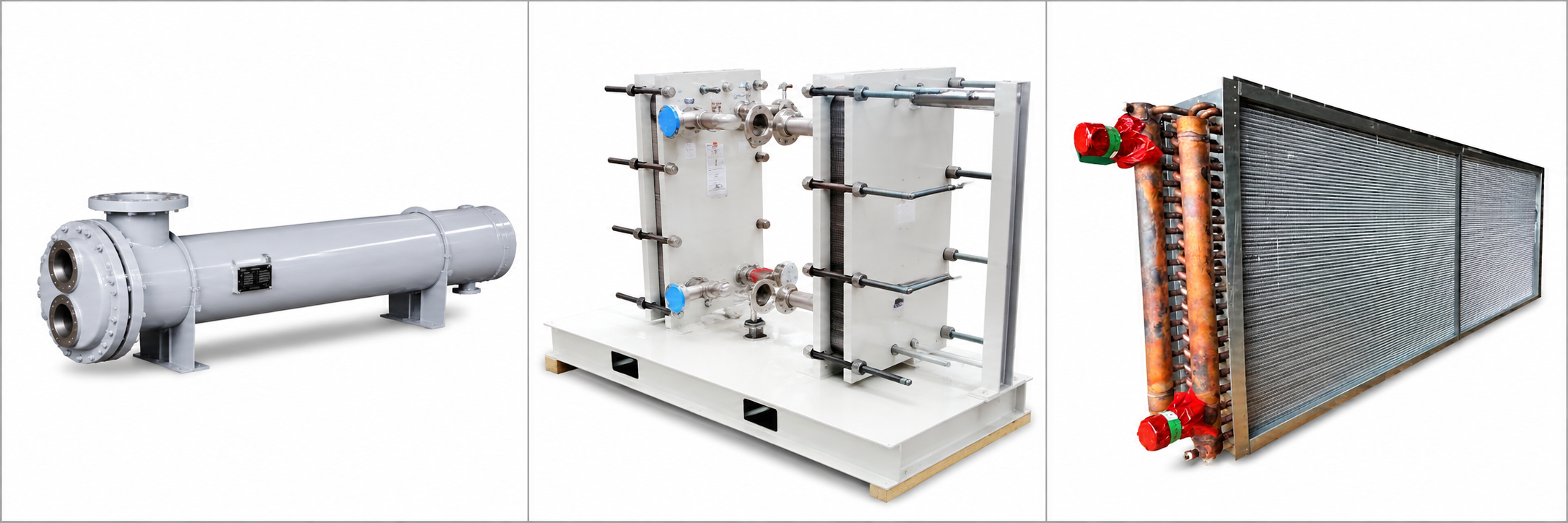
Protecting heat-transfer equipment requires more than simply insulating a pipe. Facilities should identify locations where water can be trapped, confirm controls and circulation are working, and choose suitable measures for shutdowns and extreme cold.
What Happens When Heat-Transfer Equipment Freezes?
Water expands as it freezes. When it is trapped inside coils, exchanger passages, or closed piping, the pressure generated can deform or rupture components. Damage may only become apparent once ice thaws or the equipment is returned to service.
| EQUIPMENT | TYPICAL FAILURE | POTENTIAL CONSEQUENCE |
| HVAC steam / water coils | Cracked tubes or headers; bulging; failed connections | Water damage; heating loss; possible hot-water or steam release |
| Shell-and-tube exchangers | Tube rupture; damaged tube joints; cracked heads or shells | External leaks or mixing of cooling and process fluids |
| Plate heat exchangers | Cracked / distorted plates; damaged gaskets or nozzles | Fluid cross-contamination or external leakage |
| Cooling tower basins | Ice formation; damaged basin fittings and components | Restricted flow; freeze damage; failed restart |
1. HVAC Steam and Water Coils
Coils exposed to cold outside air or installed in unheated mechanical spaces are particularly vulnerable if water stops circulating or steam condensate remains trapped. Freeze damage may include split tubes, cracked headers, bulged tubing, or failures at tube-to-header connections. When the system returns to service, damaged heating coils can release hot water or steam and create a personnel hazard.
Replacement option: Cancoil finned-tube HVAC coils for original-equipment and replacement applications.
2. Shell-and-Tube Heat Exchangers
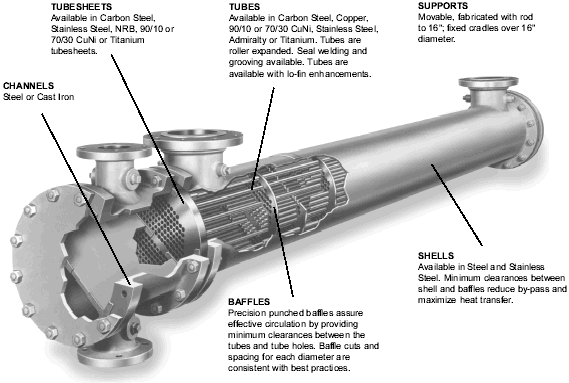
Shell-and-tube exchangers are common in lubricating-oil cooling, compressor cooling, process cooling, and water-heating service. Ice can rupture tubes, damage tube-to-tubesheet joints, deform bundles, or crack heads, bonnets, shells, and connections. A pressure-boundary crack can release fluid externally; an internal tube failure may connect the tube-side and shell-side circuits.
Why cross-contamination can be more costly than exchanger replacement
Consider a shell-and-tube exchanger cooling the lubricating oil of a compressor, turbine, or other rotating machine. If a tube ruptures, the pressure differential may allow water to enter the oil system. Contaminated lubricant can compromise bearings and other components, potentially leading to major equipment damage and a prolonged shutdown. In manufacturing, the same type of internal leak can contaminate product or process fluids.
Replacement options: Shell-and-tube heat exchangers and drop-in replacement tube bundles.
3. Plate Heat Exchangers
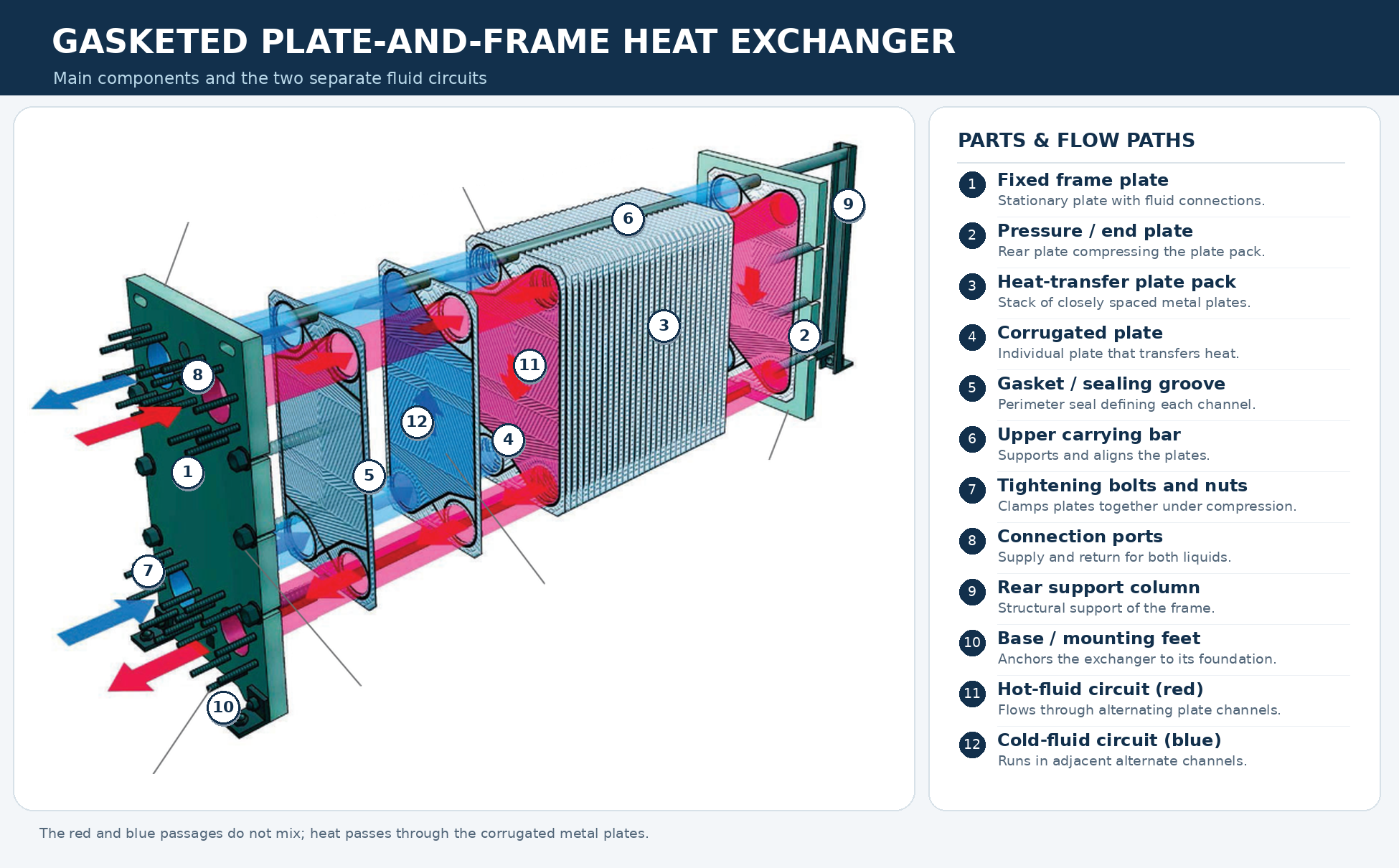
Gasketed, brazed, and welded plate exchangers use narrow fluid passages that can trap water. Freezing may crack plates, distort a plate pack, damage gaskets, or fracture nozzles and connections. Some plate failures create external leaks; others can permit mixing of the two process circuits. The outcome depends on exchanger construction and failure location. Double-wall designs provide a separate leakage path but are not immune to freeze damage.
Where plate exchangers cool lubricating oil or a critical process stream, possible cross-contamination should be treated as a high-consequence failure. Qualified personnel should check both circuits and assess product or lubricant condition before restart.
Replacement option: Schmidt/API plate heat exchangers including gasketed, brazed, and welded configurations.
4. Cooling Tower Basins and Controls
Cooling towers operated in cold weather require particular attention to basin water, make-up piping, valves, and idle equipment. Ice formation can obstruct water flow, damage basin components, or prevent a reliable restart when process cooling is required.
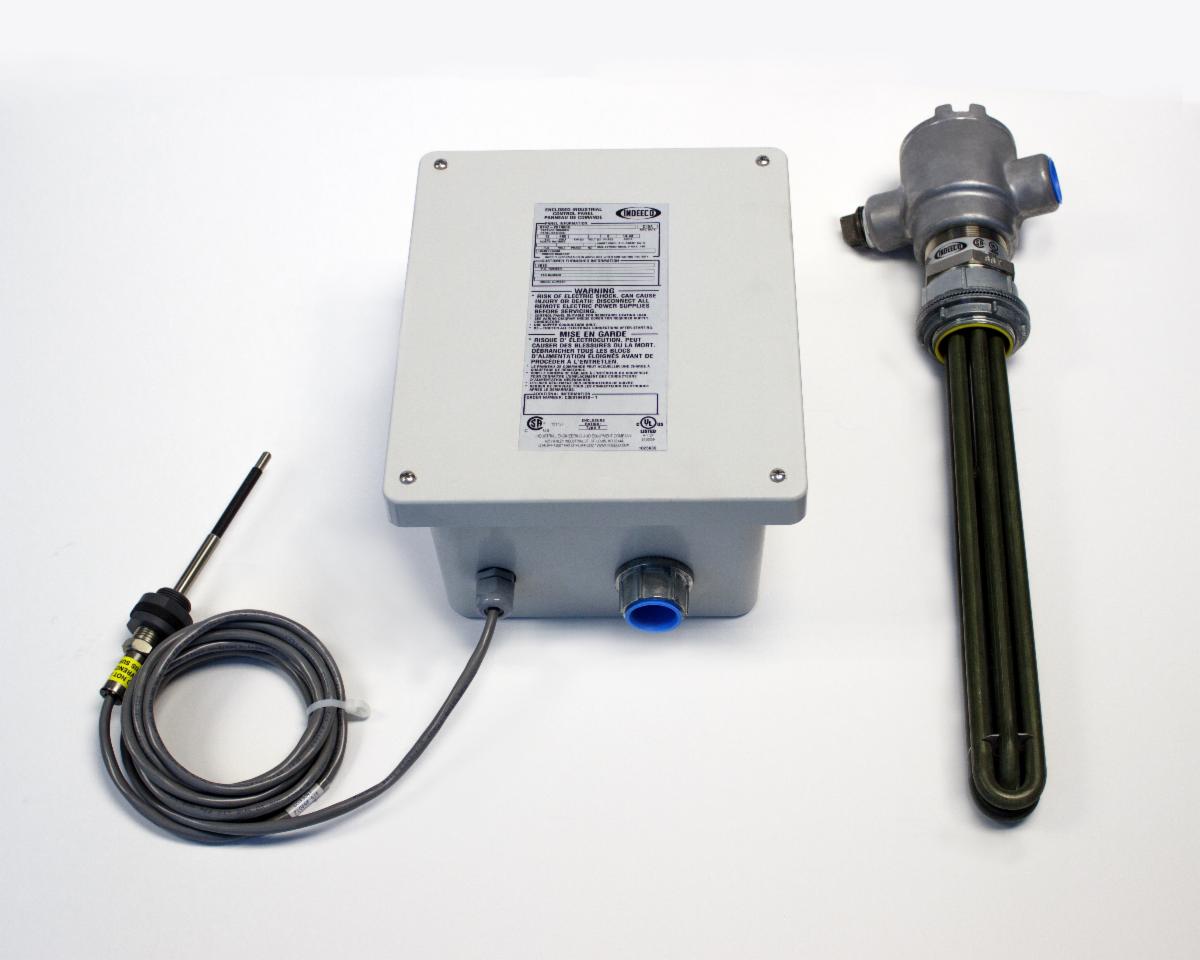
For cooling towers with water basins, properly selected immersion heaters and factory-assembled controls can help maintain basin water temperature during freezing conditions. Low-water protection is important because a heater must not operate without adequate water coverage. Basin heaters do not, by themselves, protect exposed piping, fill, or other tower components; the complete winter operating strategy must be reviewed.
Thermal Products solution: Indeeco cooling tower basin heaters and control panels for standard and custom cooling-tower applications.
5. Freeze-Protection Measures That Reduce Risk
Insulate vulnerable piping and equipment
Evaluate exposed piping, valves, connections, and appropriate equipment surfaces in non-climate-controlled or unheated spaces. Insulation slows heat loss but does not create heat; during prolonged cold weather, additional measures may be necessary. Do not obstruct required airflow, drainage, service clearances, or manufacturer-specified surfaces.
Use appropriately engineered electric heat tracing
Self-regulating heat tracing and suitable temperature controls can protect susceptible piping and compatible equipment from freezing when correctly sized, installed, insulated, and powered. Cable type, watt density, electrical-area classification, exposure temperature, and installation details must match the application. Heat tracing should not be applied directly to a coil or exchanger without manufacturer approval and a suitable design.
Thermal Products offers Indeeco heat tracing systems and BriskHeat heating and freeze-protection products. For additional background, read Indeeco Heat Trace: Advancements Over Traditional Designs on our website.
Evaluate glycol where process conditions permit
An appropriately selected glycol solution can provide freeze or burst protection in compatible water-based systems. Confirm concentration and the minimum design temperature. Account for changes in heat capacity, viscosity, pump requirements, and pressure drop, and verify compatibility with process requirements and exchanger materials.
Drain and winterize idle equipment completely
Equipment taken out of service should be winterized according to the manufacturer’s instructions. Opening a drain valve may leave water trapped in low points, headers, plate channels, or isolated tube passes. Qualified personnel may need to vent, disconnect, blow down, or use an approved winterizing fluid to ensure complete protection.
Confirm freeze-protection controls and steam condensate removal
Before cold weather, test freeze-stats, temperature alarms, pumps, dampers, auxiliary heat, and emergency power arrangements where applicable. For steam coils, assess steam traps, condensate removal, venting, and vacuum breakers so condensate does not accumulate and freeze. For cooling towers, confirm basin heater operation, sensors, and low-water cutouts.
6. What to Do If Freeze Damage Is Suspected
Do not restart equipment simply because visible ice has melted. A crack may be hidden until the unit is pressurized or brought back to operating temperature. Have qualified personnel safely isolate and depressurize the equipment; inspect for bulging and cracks; check for internal cross-contamination; and perform appropriate inspection and testing before determining whether repair or replacement is safe.
7. Emergency Repair and Replacement Support
When freeze damage occurs, restoring service quickly can help limit lost production. Thermal Products can assist with cross-referencing existing exchanger manufacturers and models, identifying replacement coils or tube bundles, reviewing repair-versus-replacement options, and coordinating available expedited manufacturing and shipment.


For qualifying products, shipment can be available as quickly as the next business day. Other 48-hour, five-day, and ten-day shipment programs may be available. Availability and lead times depend on the product, specifications, and project requirements; shipping time does not include carrier transit or installation.
Explore our replacement tube bundle and rush-shipment options or contact Thermal Products to discuss your equipment and timing.
Protect Your Equipment Before the Next Freeze
A practical freeze-protection plan should consider the entire system, not just the exchanger. Insulation, temperature controls, heat tracing, appropriate antifreeze, drainage, and routine inspection can reduce the likelihood of an avoidable failure. These measures are especially important where a cross-contamination event could damage rotating equipment or contaminate process fluids.
Thermal Products can help with both prevention and recovery. Contact your local office to discuss heat tracing, cooling tower basin heaters, replacement heat exchangers, HVAC coils, or emergency tube bundles.
Corporate: (518) 877-0231 | New England: (978) 567-7951 | Southeast: (704) 817-2412
sales@thermalproducts.com | thermalproducts.com