

News & Updates
Immersion vs. Circulation Heaters – A Simplified Design Guide

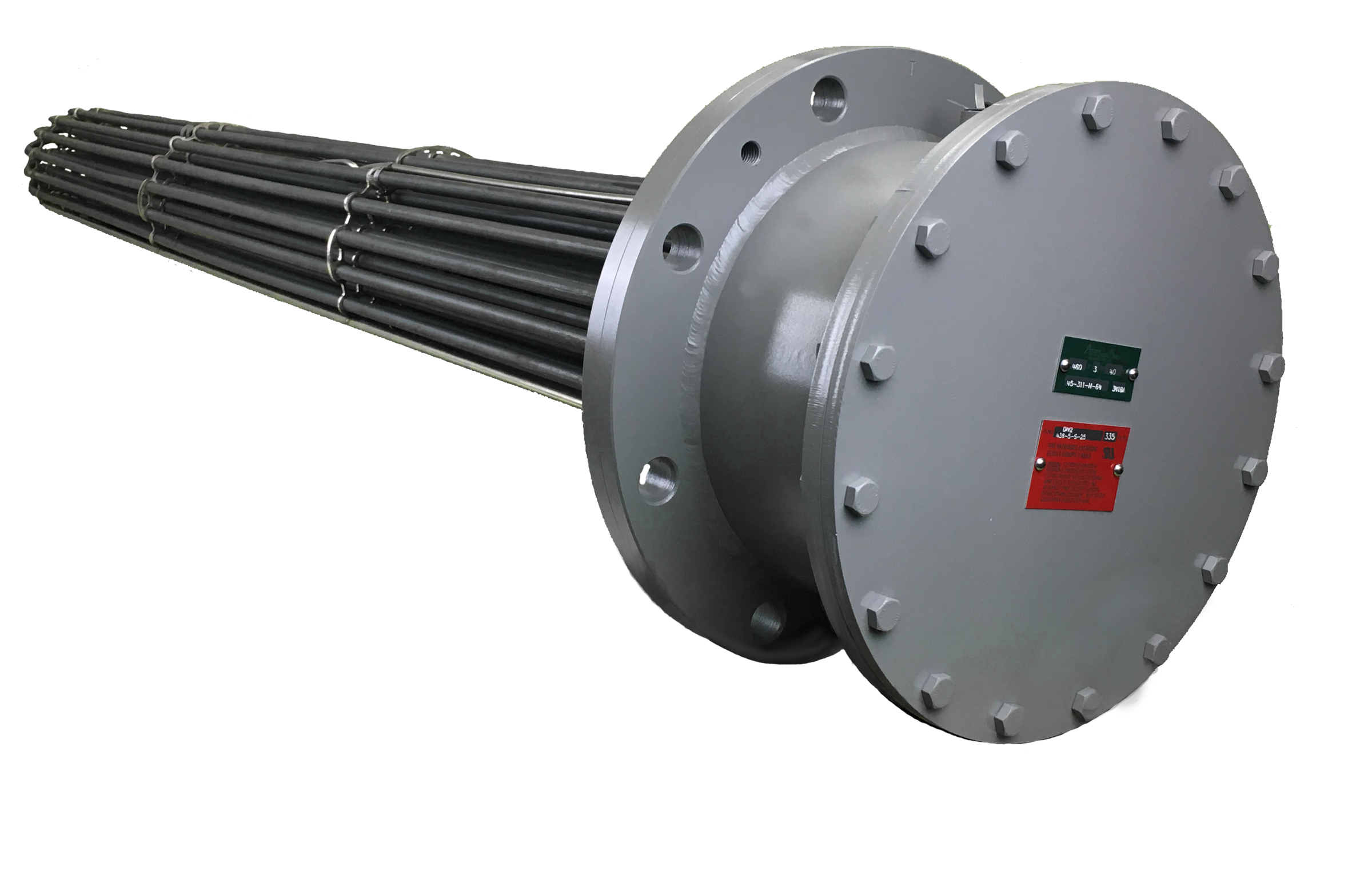
When selecting an electric heater for warming fluids in industrial or process applications, knowing the heat load (kW), voltage, and phase is a great starting point. But choosing the right type of heater and the proper watt density is just as important to ensure reliable operation and long heater life.
What is Watt Density?
Watt density is the amount of heat a heater gives off per square inch of its heat transfer surface area that’s in contact with the process fluid.
- High Watt Density:
- Suitable for fluids like water that can absorb heat quickly.
- Typical range: 50–75 W/in².
- Allows for shorter elements.
- Low Watt Density:
- Required for sensitive fluids like oils, dairy products, or chemicals.
- Accumulation of foreign matter on heater elements increases thermal resistance, impeding heat transfer to the process fluid and causing localized overheating that leads to premature element failure.
- Typical range: 25, 15, or even 10 W/in².
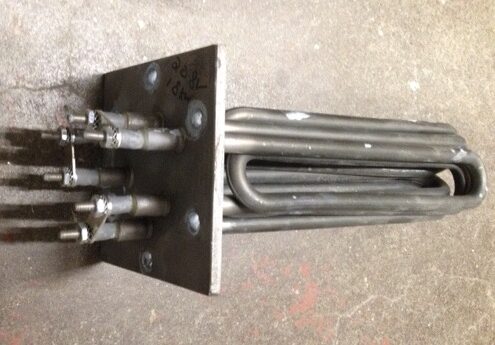
- Requires longer elements, sometimes bent into U or W shapes to fit in tanks.
- Longer elements = more material = higher cost.
Two Main Types of Electric Heaters
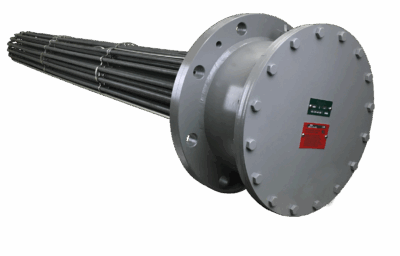
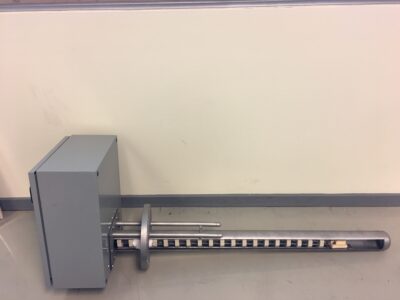
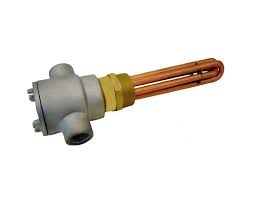
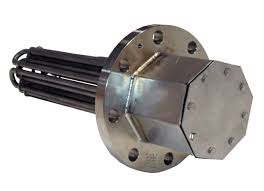
1. Immersion Heaters
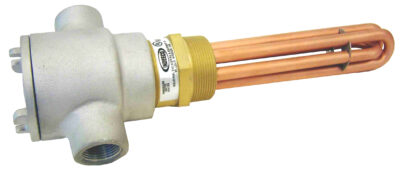
- Installed directly in the fluid, typically in a tank or reservoir.
- NPT, flange and other connection types are available
- Best for tank-based or batch heating where the fluid is relatively still.
- Lower watt densities are preferred since heat is not carried away quickly.
- Heater must always remain fully submerged or have a cold section above the fluid level to prevent overheating damage.
- Common uses: Storage tanks, oil heaters, chemical baths, freeze protection.
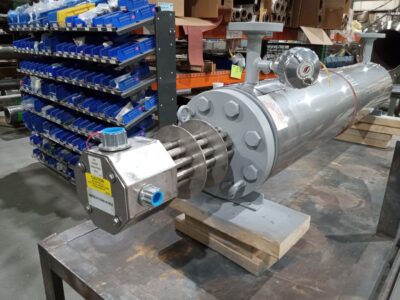
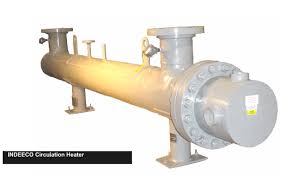
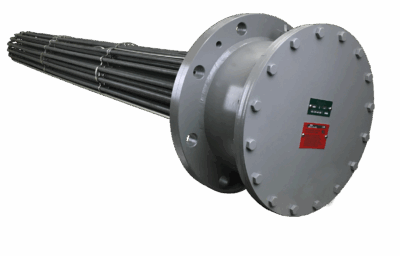
2. Circulation Heaters
- Installed inline, with a pump circulating fluid through a closed vessel.
- The fluid flows over heating elements, quickly carrying heat away.
- Allows for higher watt densities, shorter heater lengths, and compact designs.
- Ideal for continuous, inline heating processes requiring precise outlet temperature control.
- Common uses: Fuel preheating, water or chemical process loops, gas heating, steam generation.
Quick Selection Guide
- Tank-based → Use an Immersion Heater.
- Inline for continuous process heating → Use a Circulation Heater.
Need Help?
The Thermal Products sales team can help you select the correct heater type, watt density, and design for your application.Contact us today to schedule a consultation!