

News & Updates
Why Temperature Codes Matter in Hazardous Classified Areas — Especially for Electric Process Heaters


In any areas where flammable gases, vapors, or dusts are present, temperature codes (T-codes) play a critical safety role. This is especially important when designing or selecting electric process heaters from Indeeco or Accutherm, which typically generate high surface temperatures.
1. Prevent Ignition of area Flammable Substances
- Every flammable substance has an Autoignition Temperature.
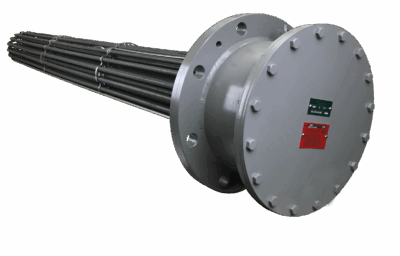
- Indeeco Electric process heaters can reach high surface and/or sheath temperatures, which may exceed the autoignition temperature of gases or vapors present in the ambient environment.
- T-codes ensure that the heater’s maximum surface temperature is safely below the autoignition temperature of the hazardous material in the ambient environment.
2. T-Codes (Standardized Temperature Limits) T-codes define the maximum allowable surface temperature of equipment:
| Maximum Surface Temperature | NEC/CE T-Code | IEC T-Code |
| 450°C (842°F) | T1 | T1 |
| 300°C (572°F) | T2 | T2 |
| 280°C (536°F) | T2A | |
| 260°C (500°F) | T2B | |
| 230°C (446°F) | T2C | |
| 215°C (419°F) | T2D | |
| 200°C (392°F) | T3 | T3 |
| 180°C (356°F) | T3A | |
| 165°C (329°F) | T3B | |
| 160°C (320°F) | T3C | |
| 135°C (275°F) | T4 | T4 |
| 120°C (248°F) | T4A | |
| 100°C (212°F) | T5 | T5 |
| 85°C (185°F) | T6 | T6 |
Example: If the autoignition temperature of a gas or liquid in the area is 180°C, then a T3 heater (200°C) is unsafe—you must choose T4 or lower.
3. Avoid Explosion Hazards in Process Heater Design
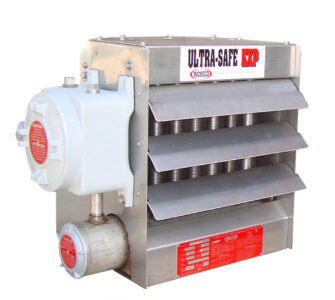
- Electric heaters can be originating sources of ignition if not properly rated.
- Designers must consider:
- Heater sheath temperature
- Setpoint temperature
- Overtemperature protection (e.g., RTDs or thermocouples with high-limit controllers)
- Ambient conditions and heat dissipation
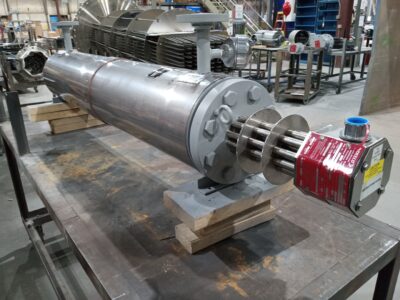
- It is also important to remember the external surface temperature of the heater terminal box enclosure and heater vessel, if an electric circulation heater or electric tank heater (not just the internal element temperature), must comply with the required T-code.
4. Design Considerations for Electric Heaters when designing electric process heaters for hazardous areas:
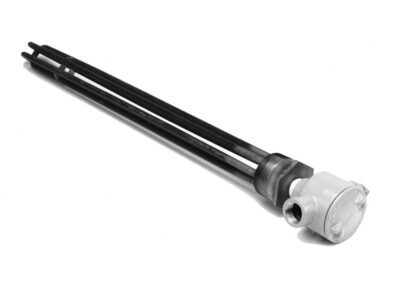
- Choose certified explosion-proof or flameproof enclosures.
- Include redundant temperature limiting devices (thermostats, sheath hi-limit sensors).
- Account for worst-case scenarios (loss of flow, sensor failure).
- Perform heat loss and thermal runaway analysis to ensure T-code compliance in all conditions.
5. Regulatory & Standards Compliance
- T-code selection must comply with:
- NEC, IEC and ATEX codes in USA and Europe
- Heaters must carry hazardous area certifications from approved bodies (e.g., UL, CSA, ATEX, IECEx) with the appropriate T-code marking.
Temperature codes are not negotiable when designing an Indeeco electric heater in hazardous areas. They ensure the Indeeco electric heater element and surface temperature remains below the ignition point of the ambient hazardous material, reducing the risk of fire or explosion or both. Proper design, selection, and certification of electric process heaters based on T-code is essential for both safety and code compliance. Contact your local Thermal Products Inc Sales Engineer if you have an application to discuss or further questions regarding Temperature Codes and classified areas.